

Focal Common Issues With Car Installations In La Verne California
Anyone in La Verne who has lived with a mediocre car audio install knows the feeling: a buzz at certain notes on Bonita Avenue, a voice that drifts left on the 210, or bass that shows up as a vague pressure rather than a distinct tone. It is not that the gear is always at fault; more often, the installation and tuning create the problem. Focal components are revealing—which is a gift because they quickly show what is right and what still needs attention. When you understand the common pitfalls that occur around our local roads and climate, you can avoid them and let your system shine. The goal is not to chase specs; it is to ensure the music feels honest from D Street to Marshall Canyon, whether you are listening to talk radio or that album you cannot stop spinning. An accurate, comfortable system starts with good choices and continues with careful hands, and systems anchored by Focal mobile audio reward that care.
Rattles and resonance that steal clarity
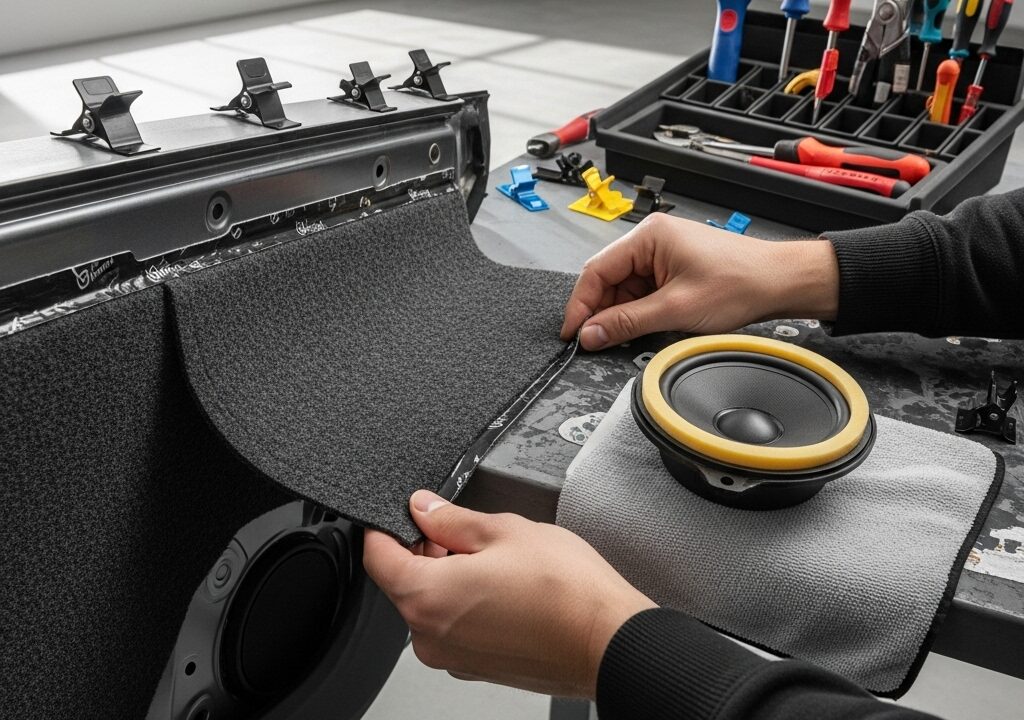
La Verne’s mix of smooth boulevards and occasional coarse patches can stir up vibrations you did not know your car had. Door panels, license plates, and trunk lids love to sing along at the wrong moments, especially once you add a subwoofer. Even if your speakers are impeccable, resonance muddies midbass and steals the snap from snares. The fix is not exotic: thorough fastener checks, strategic damping in the doors and trunk, and proper sealing around speaker mounts. Focal’s precise midbass drivers respond immediately to these improvements, tightening the low end and revealing texture you might have thought impossible in a car.
It is also vital to avoid air leaks. An unsealed speaker mount acts like a small vent, reducing control and letting the back wave interfere with the front. You end up with a hollow, papery tone. In a properly sealed and damped door, the same driver yields a confident, punchy response that holds together when you turn onto Foothill and the cabin noise rises.
Incorrect tweeter placement and aggressive top end
Tweeters set too on-axis in reflective cabins can produce splashy or piercing highs, especially with glass nearby. Because Focal tweeters are detailed, aiming matters. The solution is gentle off-axis orientation, modest attenuation where necessary, and a crossover point that suits the car’s acoustic behavior. When properly placed, those highs become silky and spacious, allowing you to enjoy long drives around the University without fatigue. Imaging also stabilizes, creating a convincing center that keeps the lead vocal where it belongs.
Do not overlook the windshield and dash reflections. On some vehicles, a few degrees of rotation or a shift in mounting height can make the difference between crisp air and brittle glare. Test on known reference tracks as you take a loop toward San Dimas Canyon; if cymbals sound like white noise rather than metal, back off the aim and recheck levels.
Underpowered systems and compression at the chorus
Another common issue is insufficient power. Factory units often struggle to provide clean current when the music swells, turning peaks into flattened, grainy moments. The fix is dedicated amplification with healthy headroom. With stable power feeding Focal speakers, you gain dynamics without strain, so the big chorus on your favorite track maintains punch and grace even as you merge onto the 57. Listeners describe this change as the system “breathing” better. It is not about earth-shaking volume; it is about control.
Power is also about consistency from song to song. A properly matched amplifier maintains tonal balance at different levels, which means late-night listening on quiet streets remains just as engaging as a sunny freeway sprint. Without that match, you end up chasing the volume knob, a sign the system is working too hard.
Poor integration with factory sources
Modern dashboards in La Verne cars hold a maze of connections—safety chimes, navigation cues, Bluetooth calls. When integration is sloppy, you get hiss, uneven levels, or the dreaded missing bass after the car’s internal processing cancels signals. Good integration preserves all factory functions while passing a clean, predictable signal to your amplifiers and speakers. Once that path is secure, Focal components do what they were built to do: translate music with clarity. Phone calls land with lifelike presence, and navigation prompts sit at a polite but audible level, relieving the driver of constant adjustments.
The tricky part is knowing what the car is doing behind the scenes. OEM systems might apply loudness curves or phase tricks to make small speakers sound bigger. If you do not neutralize those tricks, your upgrade fights a ghost. The result feels off even when the parts are excellent. The cure is testing, documentation, and, when needed, summing or de-processing before amplification and tuning.
Neglected time alignment and uneven staging
Because the driver sits closer to the left speaker, the image tends to collapse to that side without time alignment. Many La Verne installs skip this step or rely on rough estimates. The fix is precise measurement and tuning. Once aligned, the stage snaps into place; vocals occupy the middle, instruments fan out naturally, and the car disappears. On a relaxed drive down Bonita Avenue at dusk, this centered image feels like a small stage inside your dash. It changes how you experience even spoken word content, making voices more intelligible and less fatiguing.
Equalization is the companion to time alignment. Without it, door resonances and cabin modes carve hills into your frequency response. Gentle, surgical EQ smooths those hills. The key word is gentle; overcorrection introduces its own problems. Focal speakers are transparent enough that small EQ changes produce audible and satisfying improvements.
Mismatched crossover points and tonal gaps
Crossovers determine who handles what. Set the points poorly and you create either overlaps that cause boom or gaps that thin out the middle. It is common to see subs playing too high or midbass drivers asked to do subwoofer work. The fix is to let each driver do its natural job. Focal’s component sets are designed with clear strengths: tweeters for airy detail, mids for articulate body, midbass for punch, and subs for depth. When you align crossover points with those roles and shape slopes to match the cabin, the system behaves like a single instrument.
Listen for signs of a mismatch on roads you know well. If the bass seems to come from the trunk and voices feel detached up front as you coast toward the 210, the sub is probably crossing too high or too loud. If snares lack impact and the system sounds anemic at moderate levels, raise the high-pass on the mids and let the sub take the heavy lifting with authority.
Skipping damping and secure mounting
Strong speakers in flimsy mounts are like running shoes on an icy sidewalk—lots of potential, little traction. Doors benefit from damping tiles and closed-cell foam gaskets that seal the speaker to the panel. Trunks need attention where metal flexes. Even license plates deserve a layer or two to eliminate sympathetic buzz. These steps do not add glamour, but they transform how Focal drivers behave, turning smeared attacks into crisp hits and flabby bass into tight, melodic lines.
Mounting is also about noise control at freeway speeds. When panels are quiet, you can listen softer and still hear detail. That means less fatigue on long drives past the University or along Foothill, and a more relaxing end to the day.
Overlooking climate and long-term reliability
Heat cycles challenge everything in a car. Adhesives, surrounds, wire insulation—each faces expansion and contraction through La Verne’s seasons. The cure is to choose components built for durability and to install them with an eye toward serviceability. Strain relief on wiring, protected fuse placement, and ventilation for amplifiers keep the system happy when the cabin warms under midday sun. Focal’s materials philosophy prioritizes stability, which pays dividends after months and years, long after the novelty of new gear has faded.
Reliability also lives in small decisions: using proper fasteners, avoiding tight bends that stress cable, and labeling connections so future upgrades or diagnostics are straightforward. These practices might sound mundane, but they are what separate a system you trust from a system you baby.
Testing on real roads, not just in the bay
Another common oversight is skipping the road test. A system can measure beautifully in a bay and misbehave once you hit the expansion joints near Arrow Highway. Real roads reveal rattles, wind-noise interactions, and tonal shifts. A patient loop around La Verne during final tuning makes all the difference. You hear how the system handles low-volume late nights, midday bustle, and the open sweep as you approach the 57. The final adjustments informed by those laps transform a good install into a daily joy.
FAQ
Q: Why does my system sound bright at some volumes but dull at others?
A: This is often a combination of poor integration and EQ choices. If factory loudness curves are still active, the tonality shifts with volume. Neutralizing those curves and applying restrained EQ usually restores consistency across levels.
Q: My trunk rattles only on certain songs. What should I check?
A: Start with license plate frames, trunk lid supports, and spare tire wells. Add damping where panels flex and ensure the sub enclosure is secure. Small fixes often yield outsized improvements in perceived bass quality.
Q: Can I keep my factory head unit with Focal speakers?
A: Yes, with proper signal integration and amplification. This approach preserves vehicle features and provides the clean power and predictable response that Focal components prefer.
Q: How do I know if my crossover settings are right?
A: Listen for tonal handoffs. Vocals should feel anchored and natural, kick drums should strike with confidence, and bass should seem to originate from the front stage. If any area draws attention to itself, revisit crossover points and slopes.
Q: Is DSP mandatory?
A: Not mandatory, but it is the most reliable way to correct seat position bias and cabin irregularities. Even simple time alignment and a few EQ bands can lock in imaging and reduce fatigue, especially on longer La Verne drives.
Q: How often should I retune?
A: Once a system settles, only occasional checks are needed. Seasonal temperature shifts or hardware changes might prompt a quick recheck, but a solid baseline tune remains stable for months at a time.
If you are troubleshooting issues or planning your first upgrade, remember that great sound is the result of many small, good decisions stacked together. Work with professionals who test on the same streets you drive and who treat your car as a listening room, not a parts bin. With careful integration, secure mounting, and patient tuning, your daily routes—from Foothill to the neighborhoods near the University—will feel transformed. When you are ready to trust your system every time you press play, begin with components designed for accuracy and longevity and build from there. For a foundation that rewards precision and care, explore Focal mobile audio and picture how satisfying your next drive can be.